

Mould Removal
- James McEvoy
- Sep 18, 2025
- 2 min read

Household Mould Removal: A Practical Guide
Mould is more than just an unsightly nuisance—it can affect your home’s structure, your health, and your overall comfort. Left untreated, mould thrives in damp and poorly ventilated areas, releasing spores that can cause allergies, respiratory issues, and unpleasant odours. Fortunately, with the right approach, household mould removal is manageable.
Why Does Mould Grow in Homes?
Mould loves moisture and warmth. Common causes include:
Condensation on windows, walls, and ceilings.
Leaks in roofs, pipes, or appliances.
Poor ventilation in bathrooms, kitchens, and laundry areas.
Flood damage or rising damp in basements and ground floors.
Identifying the root cause is just as important as cleaning the mould itself—otherwise it will return.
Steps to Remove Household Mould
1. Prioritise Safety
Before tackling mould, protect yourself:
Wear gloves, goggles, and a mask.
Keep the area well-ventilated by opening windows and doors.
Never dry-brush mould, as this can release spores into the air.
2. Small Patches (Under 1m²)
For manageable spots on tiles, walls, or windows:
Mix one part white vinegar with two parts water, or use a mild household detergent.
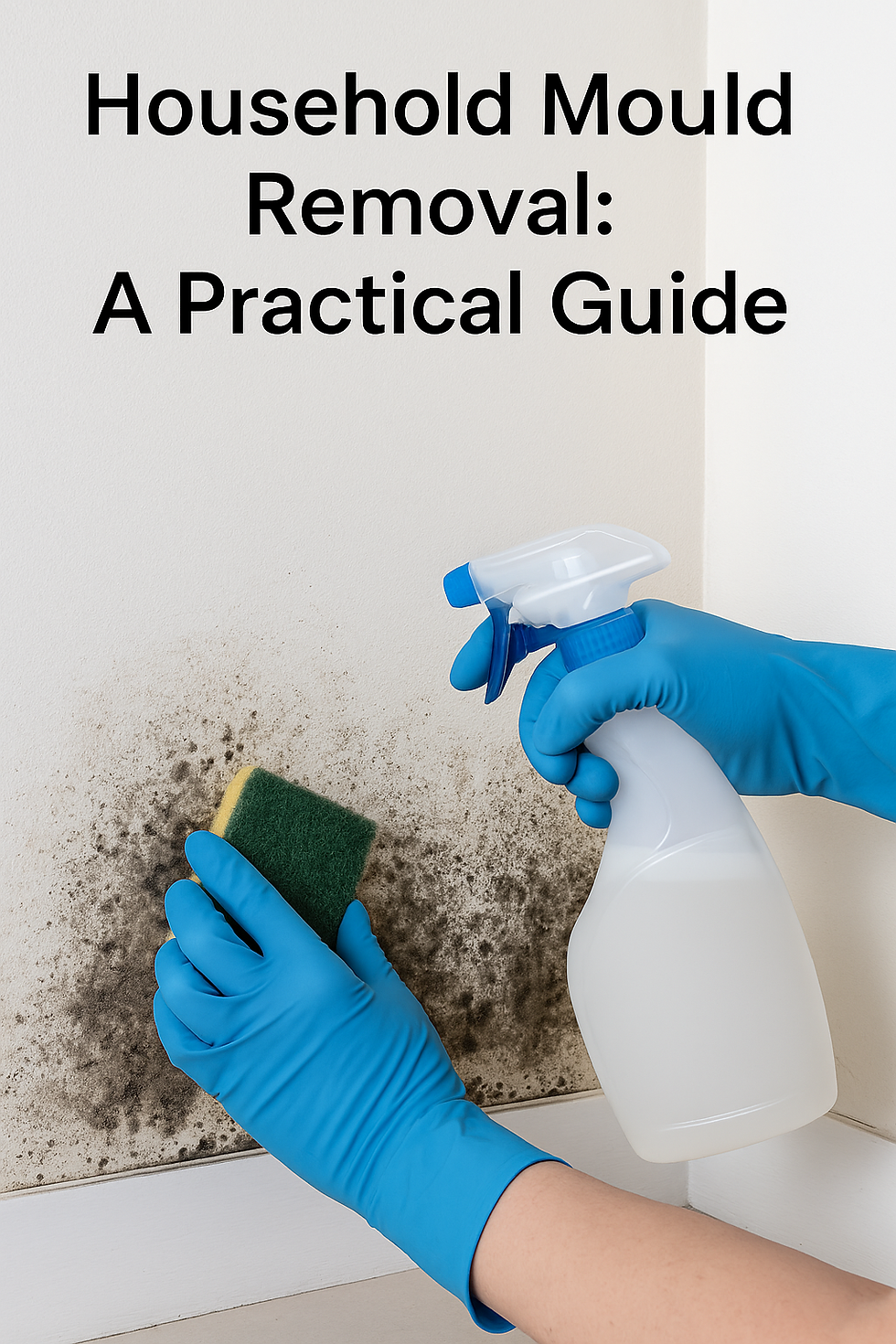
Apply with a cloth or spray bottle, leave for an hour, then scrub gently.
Rinse with clean water and dry thoroughly.
3. Stubborn or Porous Surfaces
Mould can sink into plaster, wood, or fabrics:
Use a specialist anti-mould cleaner available from DIY stores.
For fabrics, hot wash where possible or discard heavily affected items.
Consider repainting walls with mould-resistant paint after thorough cleaning.
4. Larger Infestations
If mould covers a large area (over 1m²) or keeps returning, professional help is essential. Attempting DIY removal of extensive mould may spread spores further.
Preventing Mould from Coming Back
Improve ventilation: Use extractor fans in kitchens and bathrooms, and open windows when cooking or showering.
Control humidity: Keep indoor humidity below 60%. Dehumidifiers are helpful in damp homes.
Fix leaks quickly: Repair dripping taps, roof leaks, and faulty gutters.
Insulate properly: Good insulation reduces condensation on walls and ceilings.
Regular cleaning: Wipe down windowsills and bathroom tiles to prevent mould growth.
When to Seek Professional Help
If you have underlying health issues aggravated by mould.
If mould has spread through walls, ceilings, or flooring.
If the source of dampness isn’t clear.
A professional can identify structural issues, safely remove mould, and recommend long-term solutions.


Comments